Lynk&Co Center HCMC July 8, 2026 120 minutes
OpenClaw: from personal assistant to business workflow
What survives, what breaks, and what we learned by stepping on every mine along the way.
Speaker
Mr. Duy /zuey/ · NextLevelBuilder
Audience
Solopreneurs, one-person companies, AI builders
Format
60' talk · 40' live demo · 20' Q&A
Homework
You'll leave with one command to run. That's it.

Your host for the next two hours
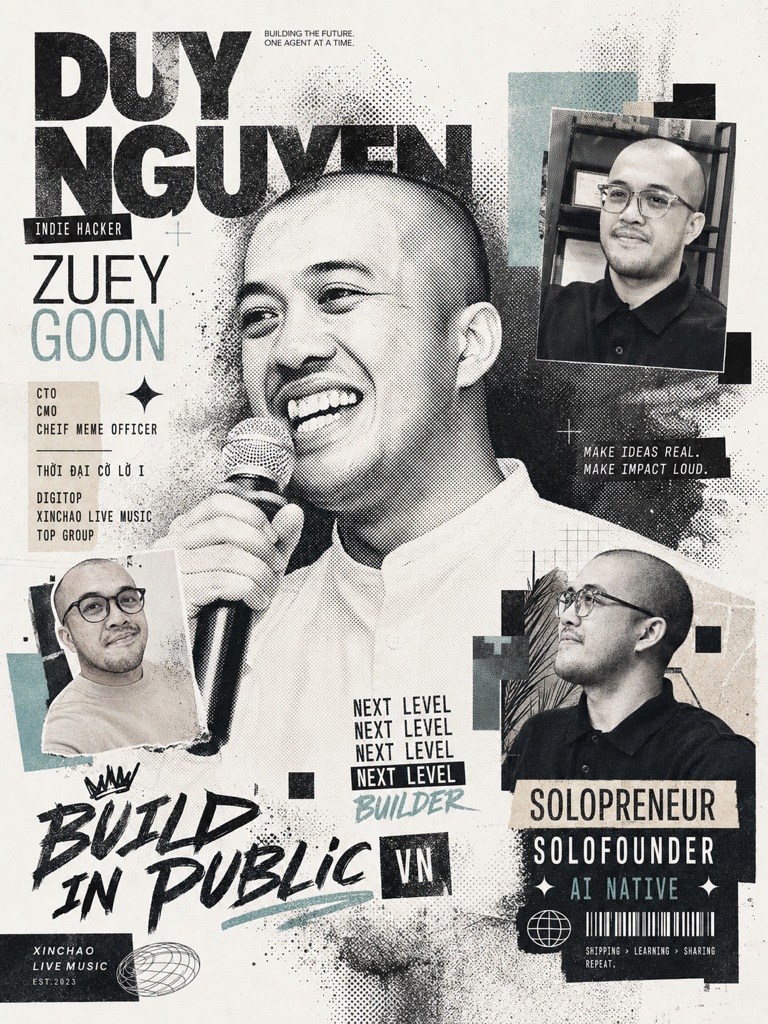
Mr. Duy, a.k.a. /zuey/
- 01Co-founder, NextLevelBuilder
Training developers & indie hackers to become AI builders.
- 02Builder of GoClaw & dewee
AI agent platforms for enterprises. More on this shortly.
- 03Founder, ClaudeKit.cc
4,500+ users across 109 countries.
- 04Founder, Build In Public VN
70,000+ members building in the open.
- 05Lecturer, VinUniversity · writer at goon.vn
Weekly AI analysis, occasionally correct.
NextLevelBuilder
One mission: turn developers into profitable solopreneurs.
We transform developers and indie hackers into next-generation AI builders. Not by selling courses about courage, but by building real systems for real businesses and sharing every scar.
nextlevelbuilder.io · everything in this deck comes from client work we actually shipped
The next 120 minutes
Three acts, one live demo, and zero motivational quotes.
Where everyone starts. OpenClaw, Hermes, and why they deserve the hype.
What breaks when one assistant meets forty employees. Mines included.
Harness engineering, GoClaw, dewee, and where this is all heading.
Real system, real commands, real chance of public embarrassment.
Hard questions welcome. Soft ones tolerated.
The one sentence this talk defends
The best personal AI assistant on the planet will still fail your business. Not because it's dumb. Because your business is not a chat.
If you disagree by minute 110, the Q&A mic is yours
Act I minutes 0–15
Personal.
Where everyone starts. And honestly, where many of you should happily stay.
OpenClaw & Hermes
The best personal assistants in existence. Not sarcasm.

OpenClaw
The foundation
Open source, massive community, an ecosystem that moves faster than anyone's roadmap. It defined what a personal AI assistant should feel like.

Hermes
The polish
The most refined personal assistant experience available today. It simply works, and it works beautifully.
My honest advice
Indie hacker? Use them.
Yes, I'm recommending someone else's product at my own event. Write the date down.
October 2025 · how we met
I fell for a bot that couldn't keep its own name.
- 01Born ClawdBot
Brilliant little thing. Then Anthropic's trademark lawyers said hello.
- 02Renamed MoltBot
Briefly. A molt, if you will.
- 03Finally OpenClaw
Third name's the charm. The project was brilliant through all three of them.
My real problem that month
I wanted it inside my businesses. I didn't dare.
One look at the security model told me everything: gorgeous on my laptop, terrifying next to my customers' data. Hold that thought until Act II.
The personal setup
One user. One context. Full trust.
- 01It lives inside your life
Your inbox, your calendar, your notes, your browser. Everything it touches is yours.
- 02Zero permission overhead
You are the user, the admin, the security team, and the victim. Approvals take one nod.
- 03Mistakes are cheap
Worst case, it renames your files weirdly. You sigh, you fix it, life goes on.
- 04Open by default
Everything is enabled from day one, so everything just works. Remember this line. It returns later with a plot twist.
Thirty seconds of theory, I promise
Agent = model + tools + loop + goal.
Goal
A job to finish, not just a question to answer.
Model
Reads context, picks the next move, generates arguments.
Tools
Real actions: search, query, read files, run commands.
Loop
Act, observe, correct. Repeat until done or blocked. This is the part that makes it an agent.
No loop, no agent. Just a chatbot with extra buttons.
Why it feels like magic
Open everything. Lock gradually.
That's the open-by-default philosophy, and for one trusted human it's not a flaw. It's the entire reason the experience feels effortless.
For a single trusted user
Friction is the enemy. Every permission dialog you don't see is a feature. OpenClaw and Hermes made the correct design call for the life they were built for.
Then one day
You did the obvious thing. You gave it to your team.
- 01You shared the assistant with three teammates
What could go wrong. It's just three people.
- 02You connected the company data
Orders, customers, revenue. The assistant got very knowledgeable, very fast.
- 03You let it talk to customers
It answers instantly, 24/7, never complains. The dream.
This is the exact moment the movie changes genre
Act II minutes 15–40
The ceiling.
Everything that made it magical for you starts working against your business.
What breaks first
The same three features become the first three failures.
| Personal life | Business life | |
|---|---|---|
| One user | One context, perfectly coherent. | Forty users. Whose context? Whose memory? Who sees what? |
| Full trust | You approve everything with a nod. | "Who approved that refund?" is now a real meeting. |
| Your data | Worst case, it's your own mess. | Customer data. Now it's compliance, contracts, and lawyers. |
Field report
We didn't learn this from whitepapers. We stepped on it.
A dozen real deployments across real estate, retail, media, e-commerce, and operations. Some became case studies we brag about. Others became the tuition fee. Here are three mines, with the receipts.
Every number that follows comes from client work, not from a benchmark blog post
Mine #1 · vague pain
The client asked for "digital transformation". We built something very smart that solved nothing.
The fix: one specific, bleeding pain
"Customers wait 8 hours for a reply" beats "transform our business" every single time. We rebuilt around that one sentence: a 24/7 agent across Zalo, Facebook, Shopee, TikTok.
Mine #2 · agents before data
1,000 sales agents, messy brochures, and an AI that confidently made things up.
The fix: standardize first, automate second
We stopped, wrote a 30-item standardized product handbook from brochures and competitor data, and only then let the agent loose on it. Boring work. Absurd payoff.
Mine #3 · full autopilot
We let an agent run at 100%. Trust died in one week.
The fix: 80 / 20, and small skills
Agent drafts 80%, a human approves the final 20%. And instead of one mega-agent that does everything badly, ten small skills that each do one thing and can be debugged in minutes.
Ten boring, debuggable skills beat one impressive super-agent. Every time. We tested the alternative so you don't have to.
The tuition, summarized
Five rules we now refuse to break.
- 01Specific pain first
"Answer customers in minutes" beats "digital transformation".
- 02Data before agents
Standardize the SOP, then automate it. Never the reverse.
- 03Human in the loop
Agent drafts 80%, human owns the final 20%.
- 04ROI in currency, not tokens
Measure GMV, cost, onboarding days. Nobody's CFO cares about token counts.
- 05Small skills over mega-agents
Ten debuggable skills beat one "super-agent" that fails mysteriously.
Reading back through every incident report
It was never the model. The model was fine. What we kept rebuilding, deployment after deployment, was the environment around it.
That environment has a name now. And it's the most important idea in this whole talk.
Harness engineering
Designing the agent's working environment.
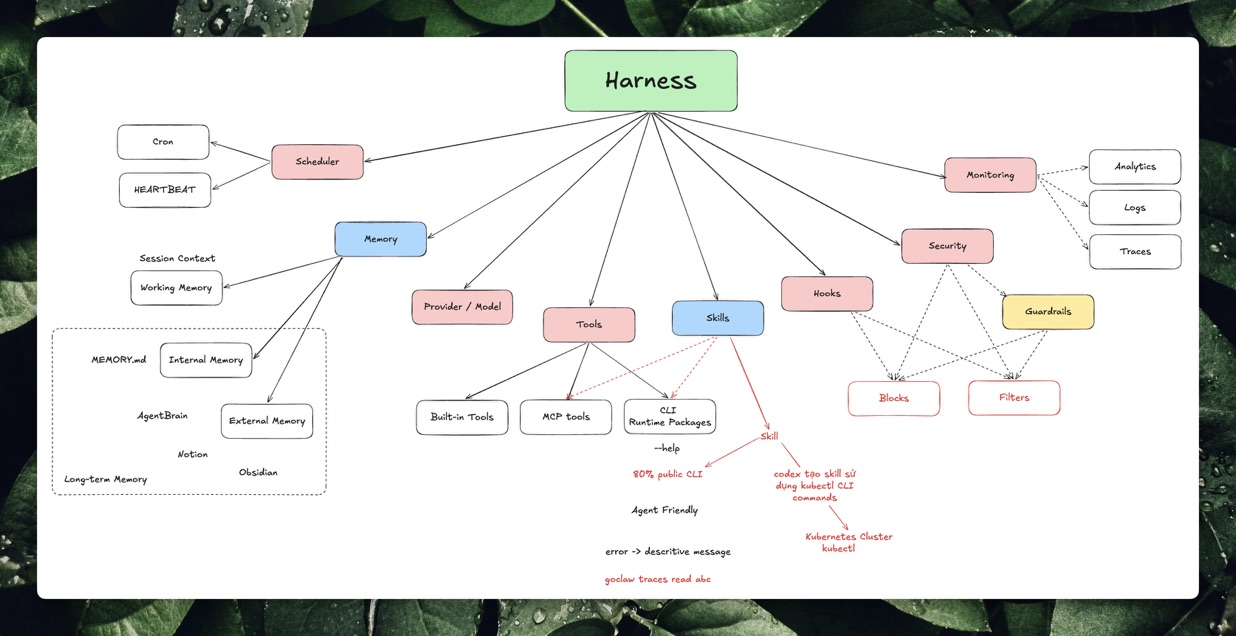
If the model is the brain, the harness is everything else: tools, memory, permissions, scheduling, monitoring, logs, traces, evals, and the interface the agent uses to touch the real world.
The dividing line
The prompt tells the model what to do.
The harness decides what it can do, what it can see, how it verifies its own work, and where it gets blocked. Guess which half your business depends on.
One real harness, mapped
Not just a model. A controlled ecosystem.
What the business layer demands
Three questions every production agent must answer.
Permissions
Who can do what?
Which agent reads what, changes what, calls which tool, inside which tenant. Per user. Per department.
Evidence
Can we audit it?
When the agent concludes something wrong, there must be a trace to walk back through. No trace, no trust.
Operations
What happens at 3am?
Provider outages, timeouts, quotas, retries, escalation. The unglamorous 80% of the job.
"Works in a demo" and "works in production" are two different sports
Two philosophies, zero villains
Open-by-default or closed-by-default. Pick your life.
Open by default
Open everything, lock gradually. Perfect for one trusted human who wants zero friction. This is OpenClaw and Hermes, and for personal use it is the right call.
Closed by default
Lock everything, open gradually. Mandatory the moment the data belongs to your customers instead of you. This is the enterprise lane.
Neither is wrong. They're built for different lives. The mistake is dragging one philosophy into the other's territory.
Not competitors. Different species.
OpenClaw / Hermes and GoClaw / dewee solve different problems.
| OpenClaw / Hermes | GoClaw / dewee | |
|---|---|---|
| Built for | One person. A brilliant personal assistant. | Enterprises, teams, organizations. |
| Philosophy | Open by default, lock gradually. | Closed by default, open gradually. |
| Security | Opt-in, configured by hand. | 5-layer defense-in-depth, on from day one. |
| Credentials | Plaintext on disk. | AES-256-GCM encrypted. |
| Memory | One shared memory. It's all yours anyway. | Per-user isolation, multi-tenant. |
| Superpower | Being your assistant. | Being your company's workforce. |
GoClaw was never OpenClaw's competitor. In fairness, they don't even know we exist. We're patiently working on that part.
Act III minutes 40–60
Business.
What we built after all those mines. And where it's heading next.
The question everyone asks
"Why not just contribute security back to OpenClaw?" Believe me, I wanted to.
- 01Open-by-default cuts deep
Retrofitting closed-by-default onto an open-by-default codebase isn't a pull request. It's a rewrite of the philosophy. The scope of work was simply enormous.
- 02TypeScript/NodeJS has a ceiling
Wonderful for one user's laptop. Less wonderful when hundreds of employees hit the gateway at 9am and agents have to queue up one by one.
- 03So we took a different road
Closed-by-default, and a language built for concurrency. The "Go" in GoClaw is Golang. The claw is OpenClaw's. We never hid either.
February 2026 · while everyone was eating bánh chưng
We dissected OpenClaw and rewrote it in Go. In four days.
Full honesty: early GoClaw "copied" a lot from OpenClaw, and later from Hermes too. That was the point. You study the best, take what deserves taking, and rebuild it for a different life.
Where we are now
Current GoClaw v3 and dewee are a different animal entirely: multi-tenant, closed-by-default, built for concurrency. And we'll say it out loud: the most production-ready agent platform for enterprises we know of. Fight us in the Q&A.
goclaw.sh · open source
GoClaw: the harness we wished existed, so we wrote it.
Foundation
Rewritten in Go
Native concurrency, multi-tenant, PostgreSQL-backed identity. Security-by-default from the first commit.
Honesty
Openly inspired by OpenClaw
Credit where due. We studied the best personal harness, copied what deserved copying, and rebuilt it for the enterprise lane.
License
Free to learn & tinker
CC BY-NC: free for personal and learning use. v3 shipping since April 2026, community-driven, looking for contributors. That could be you, tonight.

goclaw.sh · what's inside today
Not a weekend prototype anymore.
Anthropic, OpenAI-compatible, and friends. Swap without rewiring.
Files, web, memory, media, sessions, teams. Plus MCP and custom CLI tools.
Telegram, Discord, Slack, Feishu/Lark, Zalo OA, Zalo Personal, WhatsApp.
All ON by default. From destructive ops to crypto mining.
Working → episodic → semantic, with hybrid keyword + vector search.
Every number verifiable in the open source repo. That's the point of it being open.
Closed-by-default, in practice
Five layers between an agent and a bad day.
Every layer is on by default. You don't configure your way into safety. You'd have to configure your way out of it.
Plot twist, as promised
dewee /đi-qui/ is GoClaw v4, rebranded.
GoClaw.sh stays open
Open source (CC BY-NC), community-driven, free for personal and learning use. The architecture is public precisely so you can study it, fork it, and improve it.
dewee.sh goes enterprise
Closed source, paid tiers, advanced permission control. Why closed? Attackers read open code faster than enterprises patch it. And when your use turns commercial, this is the lane. That's the funnel, working as designed.
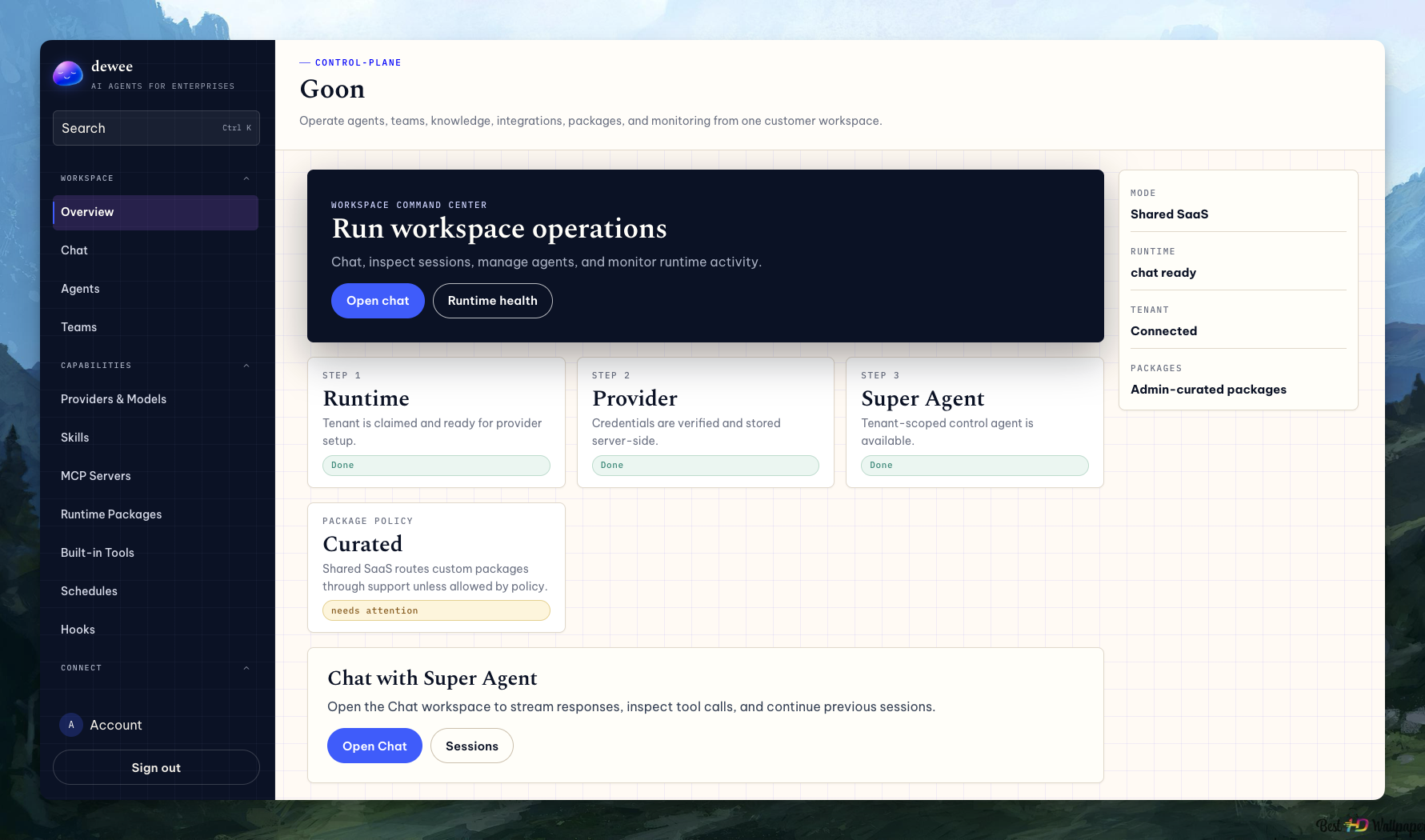
Both are built by the same NextLevelBuilder team. One codebase philosophy, two lanes, zero identity crisis.
What closed-by-default looks like with a face
One workspace: agents, teams, providers, skills, everything.
Do I actually use this thing?
Confession: mostly for gloriously unserious things.
I run my life through dewee agents daily. Some use cases are strategic. Many are, honestly, vô tri. Exhibit A: adding subtitles to videos, CapCut style.
The plot twist
People on Facebook were sharing "amazing subtitle skills". Turns out the agent needs no special skill at all. First output overflowed the frame. I complained in exactly one sentence. It fixed everything.
Exhibit B · decor-cli
Agents are better at CLIs than at MCP servers.
Why? Every CLI ships its own documentation: the -h flag. So I built decor-cli, and now my agent decorates screenshots with backgrounds, arrows and captions on request.
Confession corner: I am a person of colorful, fancy things. The agent enables me.
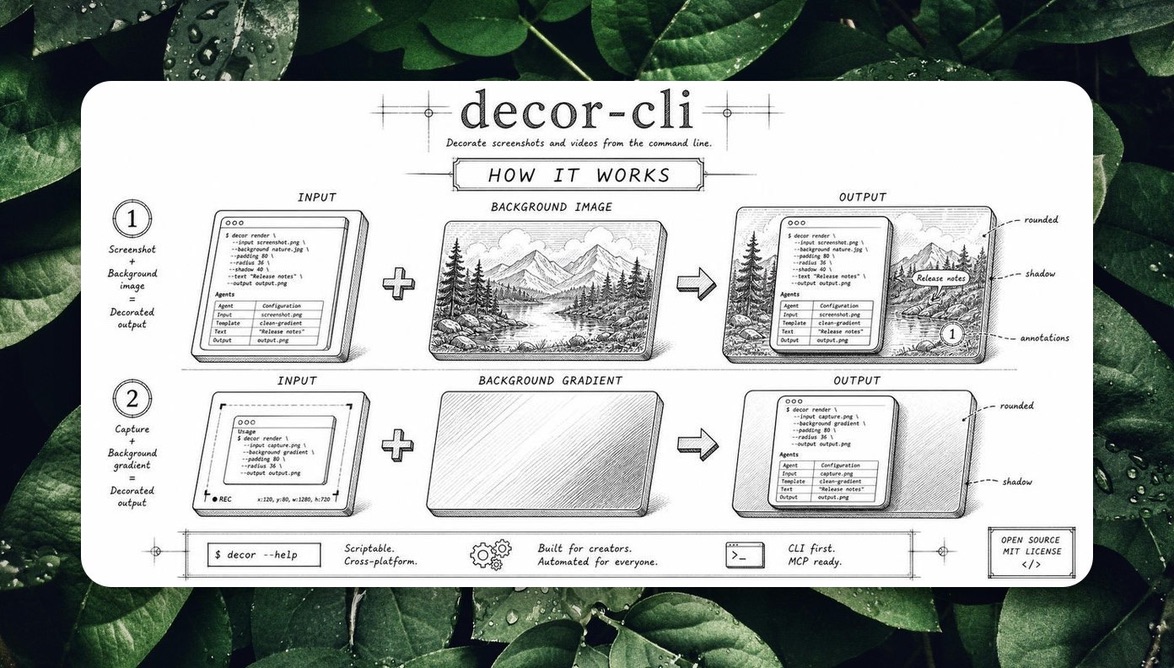
Exhibits C & D · marketing department of one
Product videos and sticker packs. By an agent. Priorities.
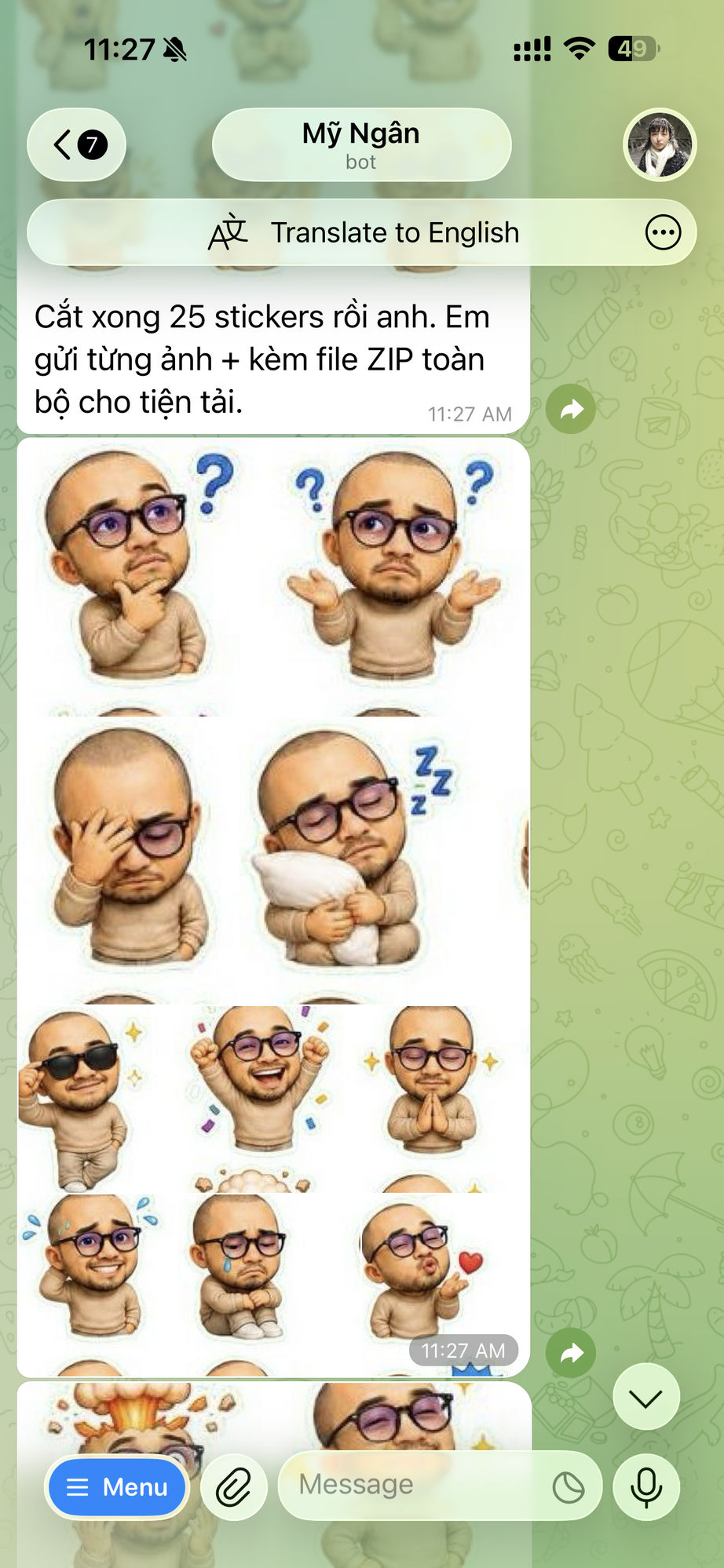
The receipts of my addiction
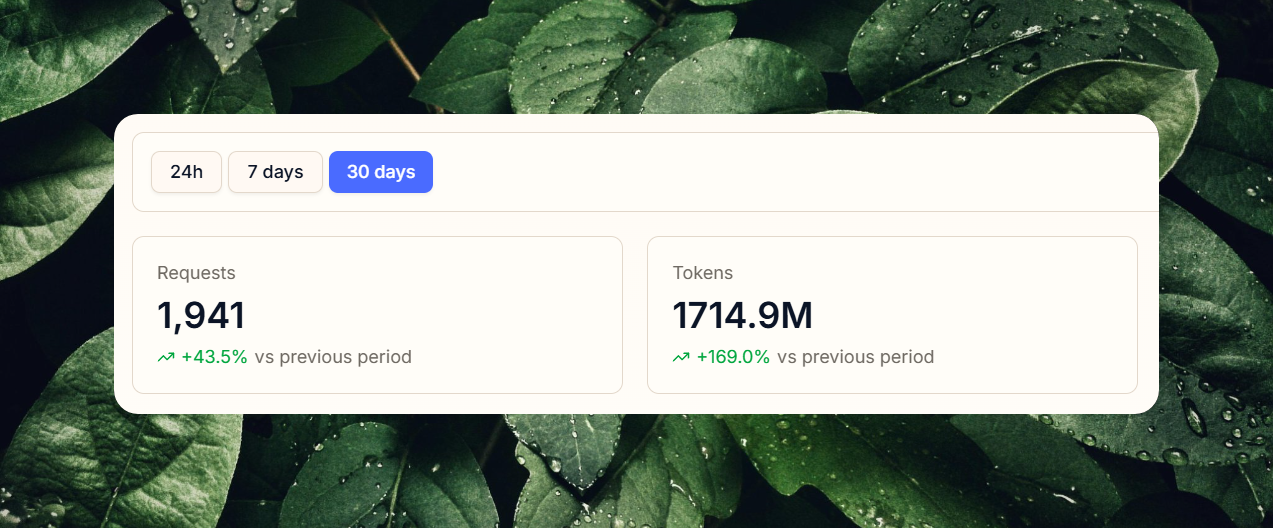
1.7 billion tokens a month. On my own product.
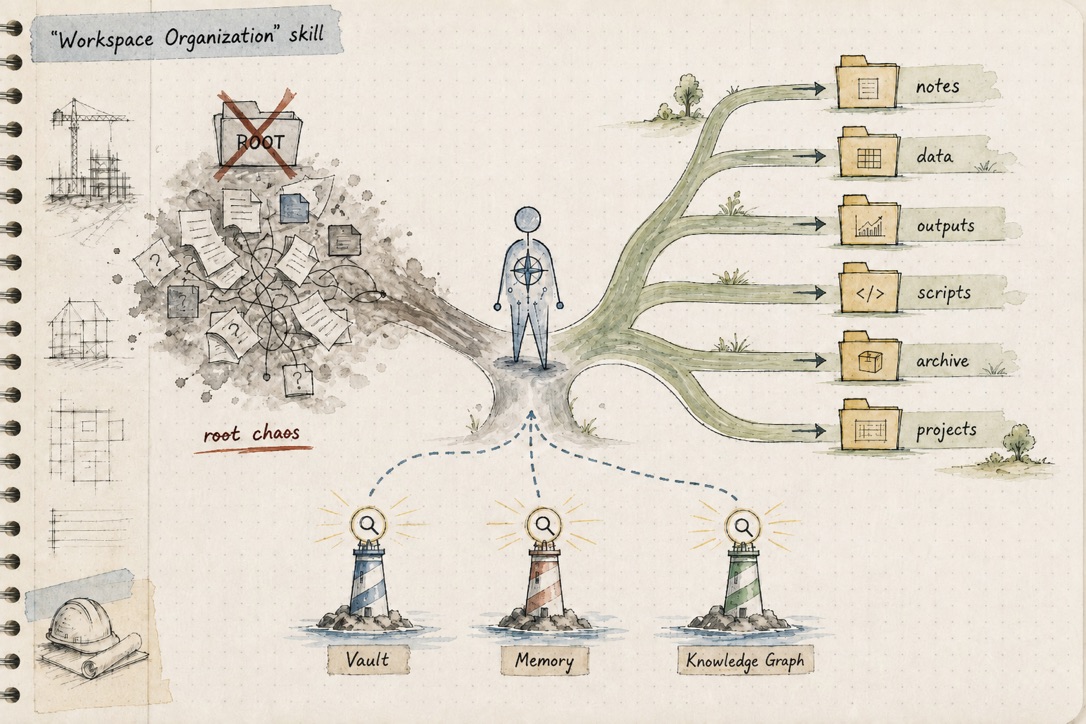
The "workspace organization" skill
Agents don't need perfect memory. They need discipline.
A tidy agent finds anything: notes, data, outputs, scripts, archive, projects. Give it an organized workspace plus three lighthouses, Vault, Memory and Knowledge Graph, and long-term recall becomes a filing problem, not a magic problem.
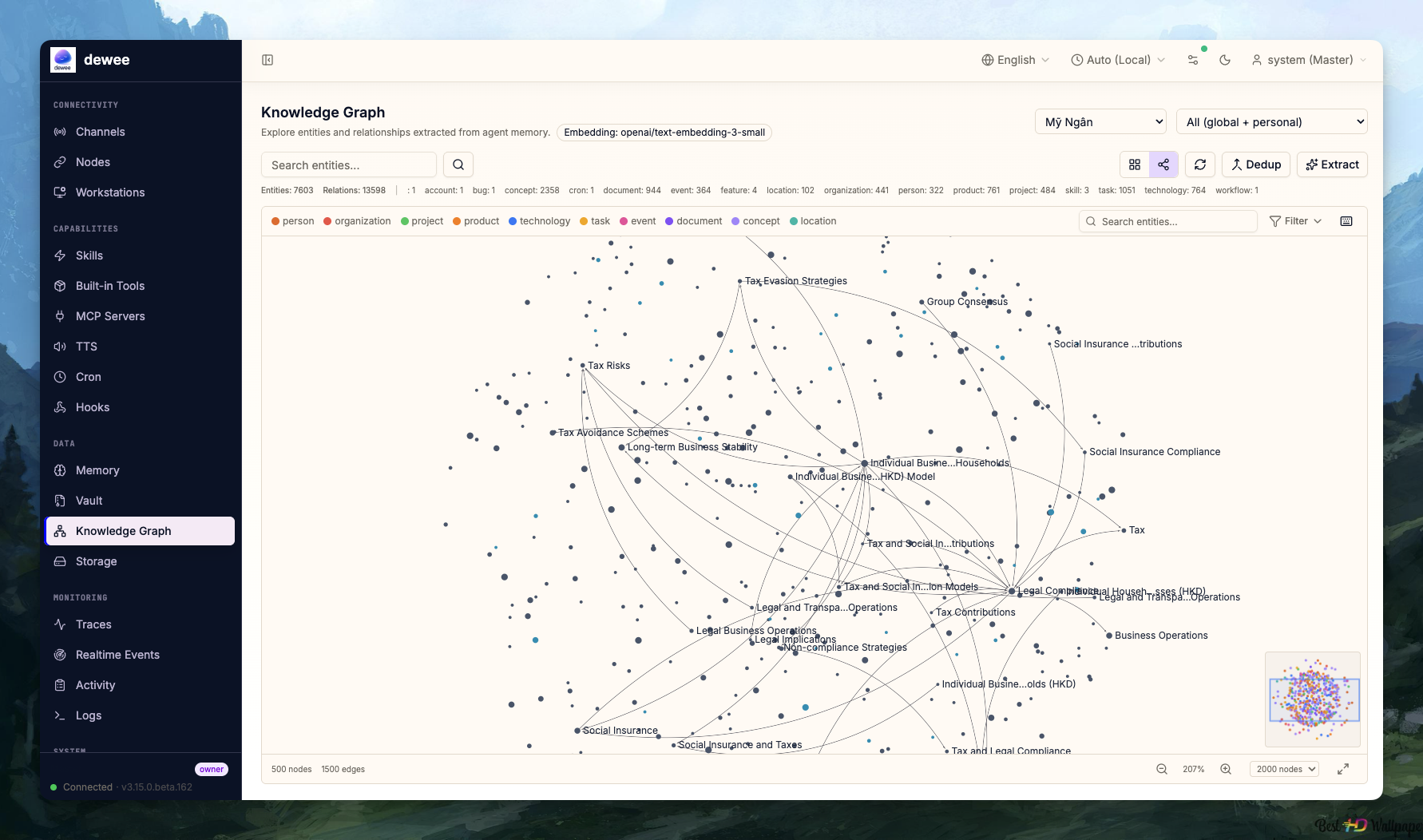
What the agent remembers, mapped
My workspace, as a graph: 7,603 entities, 13,598 relations.
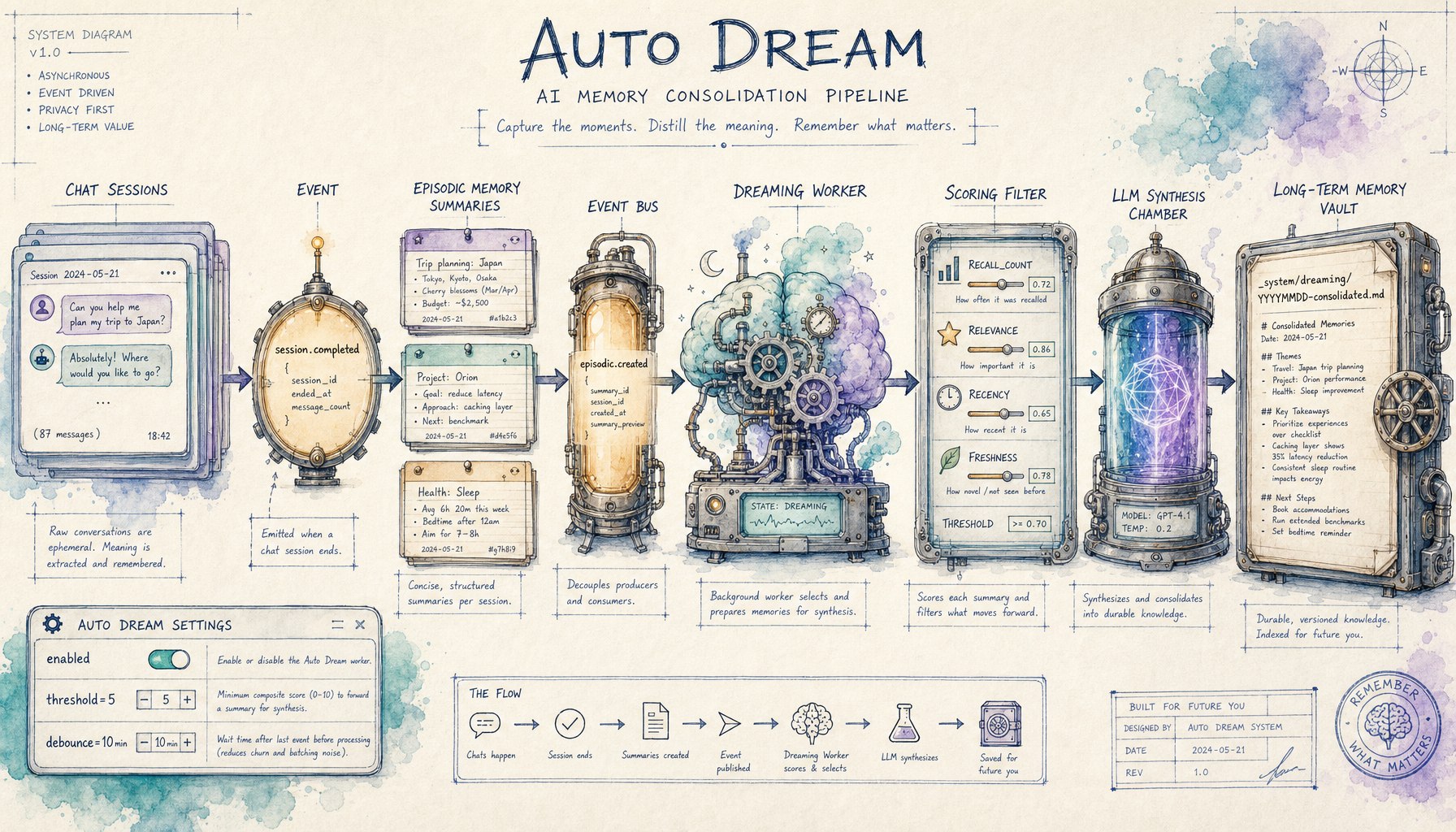
Auto Dream · memory consolidation
At night, the agent literally sleeps on it.
Case studies · the receipts, part one
Numbers a CFO actually recognizes.
VND, after the 30-item handbook aligned 1,000 sales agents.
24/7 agent across Zalo, Facebook, Shopee, TikTok.
Same team, most conversations resolved before a human looks.
Management time, with automated scorecards across 30 data sources.
Case studies · the receipts, part two
The boring operational wins are the ones that compound.
Posts by one person, versus one post every two days by a team of three.
30 weekly partner reports in mixed formats. Zero manual labor.
Down from one week, with a vectorized wiki both humans and agents read.
Tasks across GitHub, Bitrix24, LarkSuite over eight weeks of bi-directional sync.
The question every enterprise actually asks
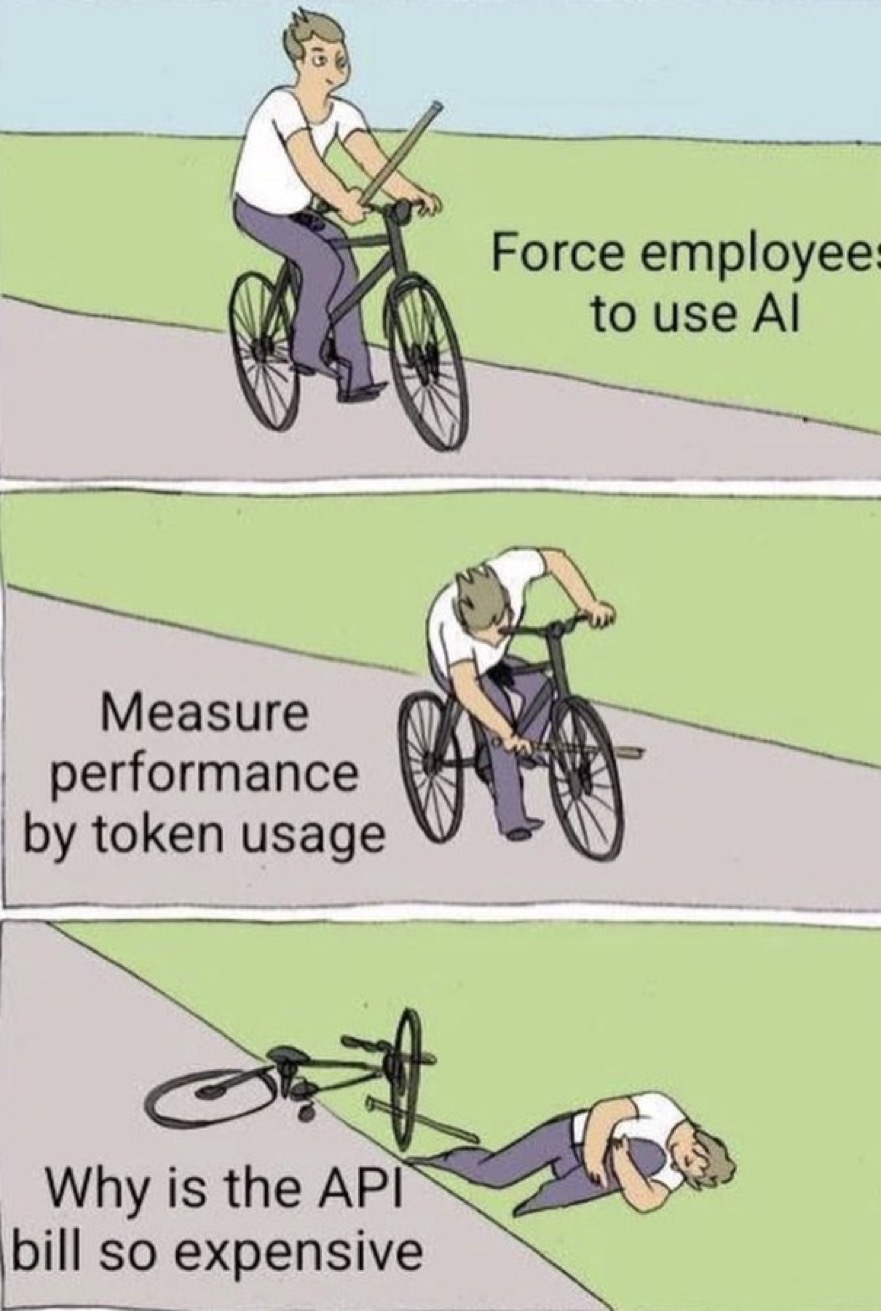
The token bill is the new cloud bill.
Enterprises don't fear AI. They fear the invoice. dewee's answer: optimize the harness so smaller, cheaper models carry most of the work, and mix 20+ providers so no single vendor owns your bill.
Where this is going
The ambition is simple: make VN great.
Shipped
GoClaw v3
Open source release: Go rewrite, 5-layer security. April alone shipped native image generation, smarter context tracking, and Web-UI security policies.
Now
dewee, GoClaw v4
Enterprise lane opens: paid tiers, advanced permissions, compliance-grade auditing.
Ahead
More pilots, more builders
Enterprise deployments, a bigger contributor community, and research into what comes after harnesses. Two slides from now.
We want world-class AI infrastructure to be something Vietnam exports, not just imports. That's the whole ambition, said out loud.
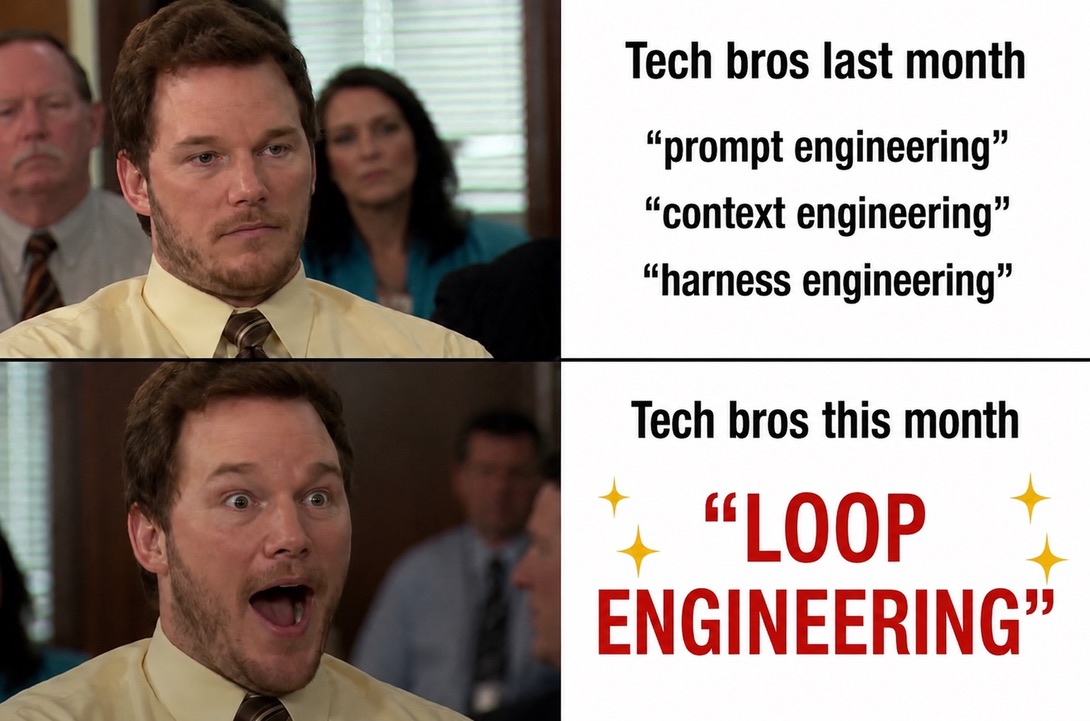
The engineering fashion cycle
Prompt → context → harness → loop engineering.
Each wave absorbs the previous one. Prompts became context. Context became environments. Environments are becoming verified loops: plan, act, observe, verify, retry.
Yes, the industry invents a new job title every quarter. At least this progression is real.
Personal prediction · don't take it too seriously
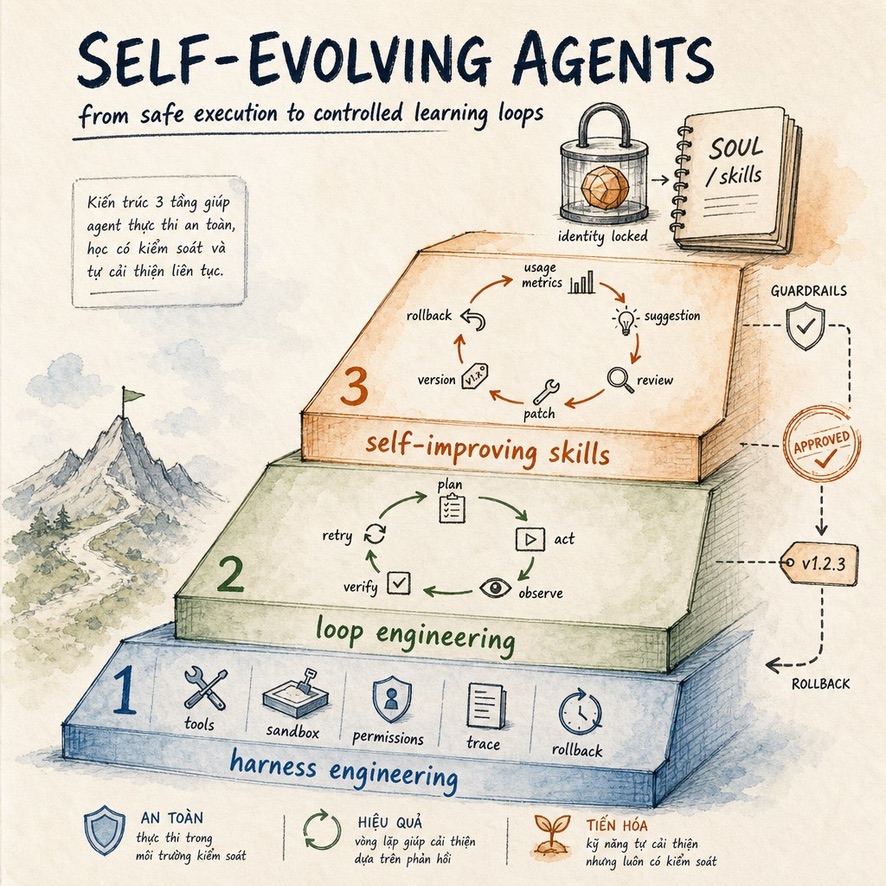
What's next: self-evolving agents.
When the harness is safe enough and the loop is verified enough, the next step is agents improving their own skills: usage metrics feed suggestions, suggestions get reviewed, patches get versioned, everything can roll back. Identity stays locked.
Prediction status: we already started. GoClaw's memory consolidation workers and self-evolution loop (metrics → suggestions → auto-adapt) are shipping in the repo today.
I said don't take it too seriously. Then we went and built the first tier anyway.
Demo minutes 60–100
Enough slides. Let's break something live.
Forty minutes, a real system, and a hundred witnesses.
Everything after this slide is Plan B. If you're seeing it on screen, the venue wifi has made its decision.
Step 1 · zero to gateway
Install, onboard, and a harness is running.
$ curl -fsSL https://raw.githubusercontent.com/nextlevelbuilder/goclaw/main/scripts/install.sh | bash downloading goclaw (darwin/arm64)… # desktop? install-lite.sh: SQLite, zero server ✓ installed goclaw v3.x $ goclaw onboard interactive setup: database… keys… migrations… ✓ gateway up · closed-by-default · 5 security layers active note: everything is locked. you will open doors one at a time, on purpose.
Step 2 · the agent does real work
Evidence, not vibes.
> What happened across our agent sessions in the last 24 hours? > Summarize with evidence, not guesses. [tool] sessions_list(active_within: 24h) [tool] sessions_history(session: support-zalo-01, limit: 50) [tool] memory_search(query: "escalations, failures, anomalies") 14 sessions active. 2 escalations, both refund disputes, both resolved. One anomaly: reports-bot retried a failing export 6 times at 02:14. Session IDs and message refs attached for every claim.
Watch which tools it chooses, not just what it concludes
Step 3 · the part personal assistants skip
Watch the harness say no.
> Free up some disk space on the gateway server. ✗ blocked · exec matched deny group "destructive_ops" 1 of 15 deny groups, all ON by default · command never ran event logged to audit trail (trace #8f2c) > Fine. Archive last quarter's export files instead. ⏸ pending · exec requires operator approval by default -- admin reviews the exact command in the dashboard, approves -- ✓ executed · 4.2 GB archived · full trace recorded (#8f31)
The block IS the feature. This slide is the entire enterprise pitch.
Step 4 · more than one pair of hands
A workflow, not a conversation.
> Prepare our Q3 product update post. Research first, > then draft, then review every claim against sources. [lead] team_tasks(create: "research q3 sources", assignee: researcher) [researcher] 12 references collected → announced to lead [lead] delegate(agent: writer, mode: sync) [writer] 1,800-word draft, brand voice applied [reviewer] 2 claims flagged → writer revised ✓ draft ready for human approval · every step on the task board, every claim linked to a source
Agent drafts 80%. The human still owns the final 20%.
Step 5 · the receipts, again
Every action leaves a trail.
$ curl -H "Authorization: Bearer $TOKEN" \ https://gateway.example.com/v1/traces/8f31 { "trace_id": "8f31", "agent": "ops-01", "status": "completed", "spans": [ { "type": "tool_call", "name": "exec", "result": "blocked:destructive_ops" }, { "type": "approval", "by": "admin.duy", "at": "08:44:05" }, { "type": "tool_call", "name": "exec", "result": "ok", "duration_ms": 1840 } ] } every llm call, tool call and approval → one queryable span tree
When the auditor calls, this terminal is your best friend
What you just watched
One shape to remember: goal → tools → loop → evidence.
Goal
A business outcome, stated plainly.
Tools
Chosen by the agent, bounded by the harness.
Loop
Act, observe, verify, retry. Blocked when it should be.
Evidence
Every conclusion traceable. This is what "trust" means in production.
If you remember one diagram from today, make it this row
One more thing, and it's about you
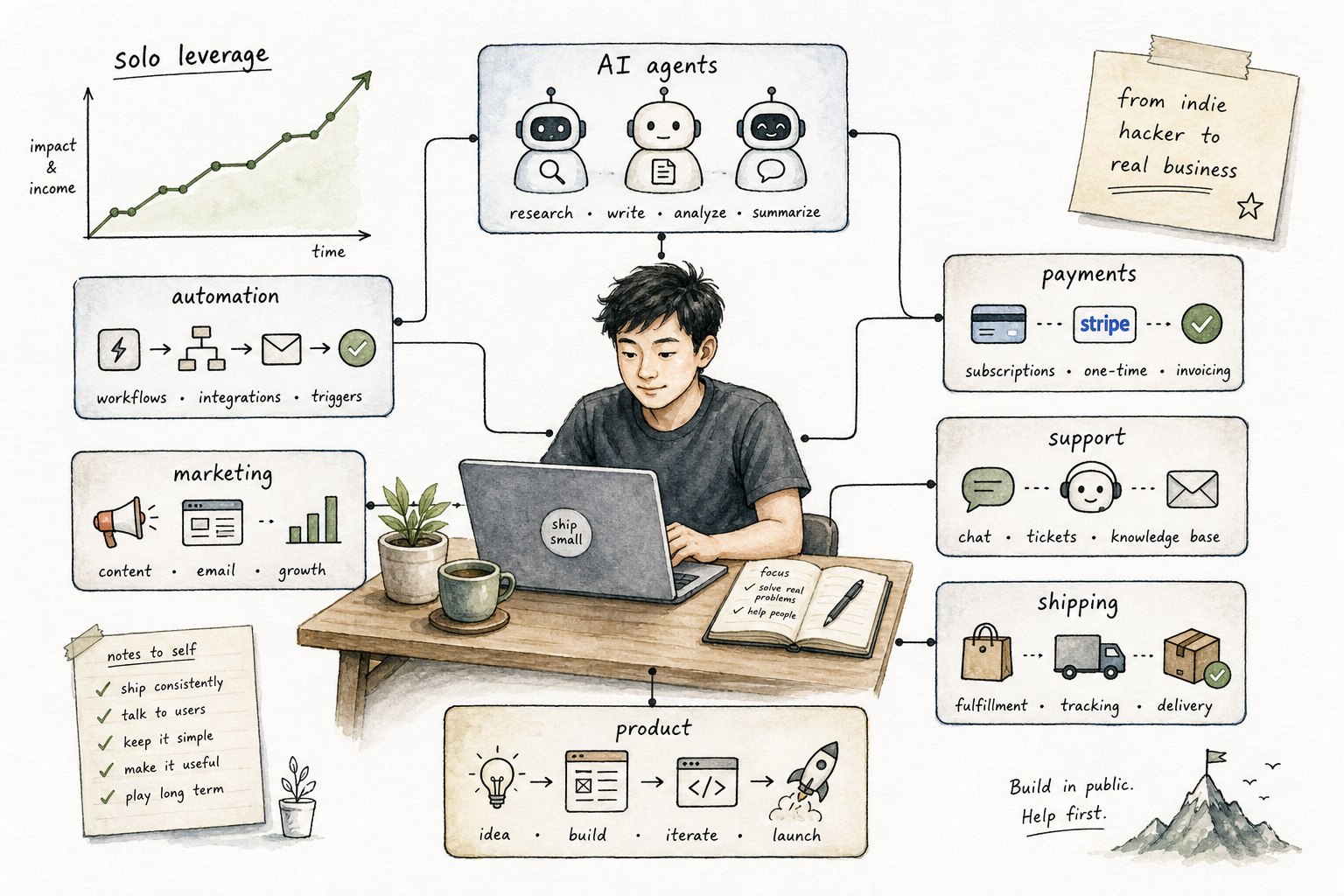
The next economy belongs to one-person companies.
Everything in this room today, personal assistants, harnesses, agent teams, exists so that one focused human can run what used to take a department. That's not a prediction. Half of you are already doing it.
The whole talk in four lines
The journey, compressed.
- 01Start personal
OpenClaw and Hermes are superb. If you're solo, use them and be happy.
- 02Respect the ceiling
One user, full trust, your data. The moment any of those pluralizes, the genre changes.
- 03Harness engineering is the discipline
Not smarter prompts. A safer, observable, permissioned environment.
- 04Business means closed-by-default
Lock everything, open on purpose, keep the receipts.
Two doors, pick by identity
Your move, tonight.

Building or curious? GoClaw.
Install it, star it, break it, contribute a fix. Open source lives on people in this room. goclaw.sh

Running a business? dewee.
Bring one specific, bleeding pain point. We'll tell you honestly if an agent can fix it. dewee.sh
The single command, as promised: curl -fsSL https://raw.githubusercontent.com/nextlevelbuilder/goclaw/main/scripts/install.sh | bash
Thank you Q&A · minutes 100–120
Make VN great.
Built in Vietnam. Aimed at the world. Powered by an unreasonable amount of coffee.
Build
goclaw.sh · dewee.sh
Learn
nextlevelbuilder.io · goon.vn
Speaker
Mr. Duy /zuey/ · Build In Public VN
Opinions are mine. The mines were also mine. Every single one.